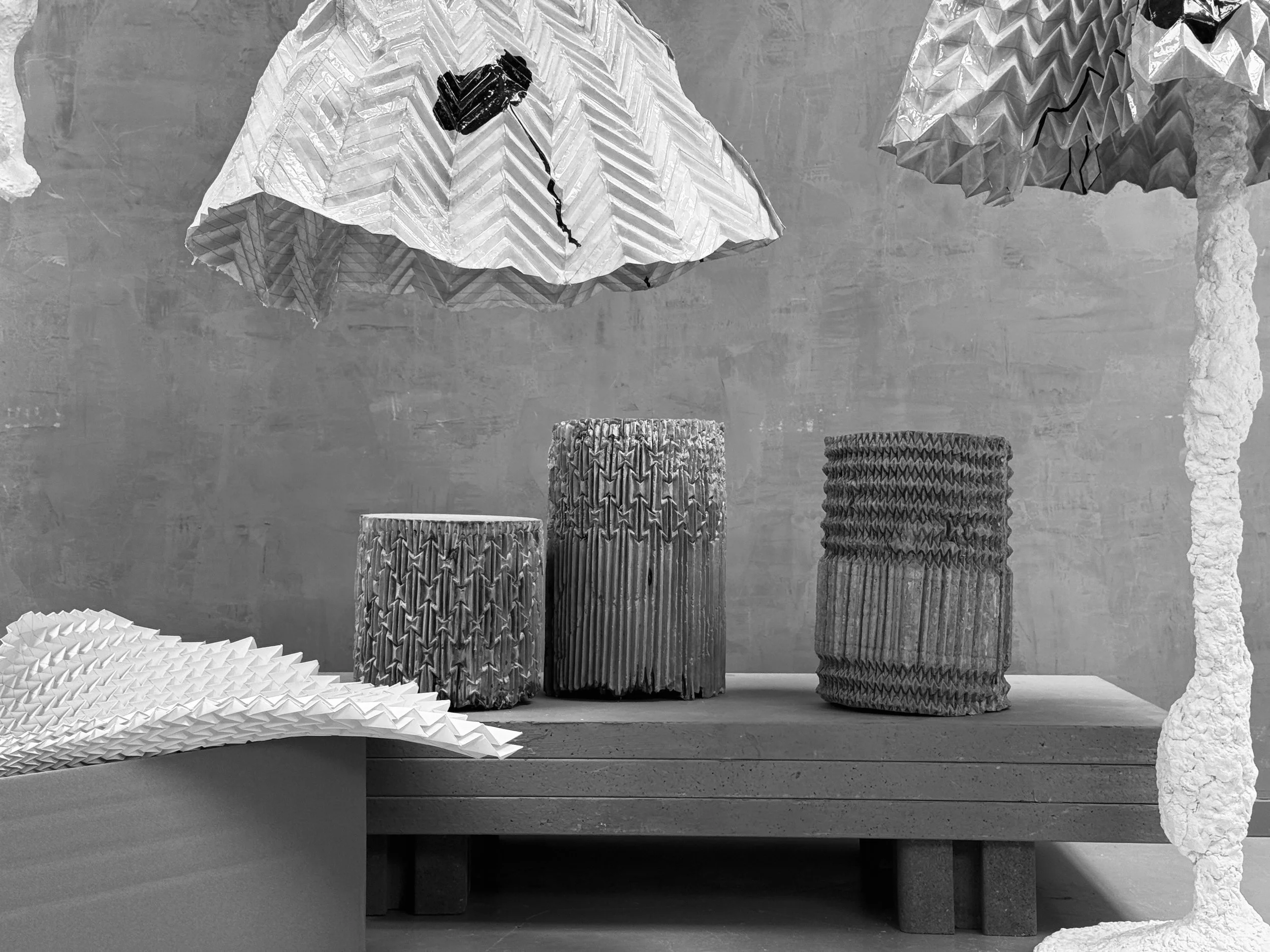
Pleated Paper Object Series
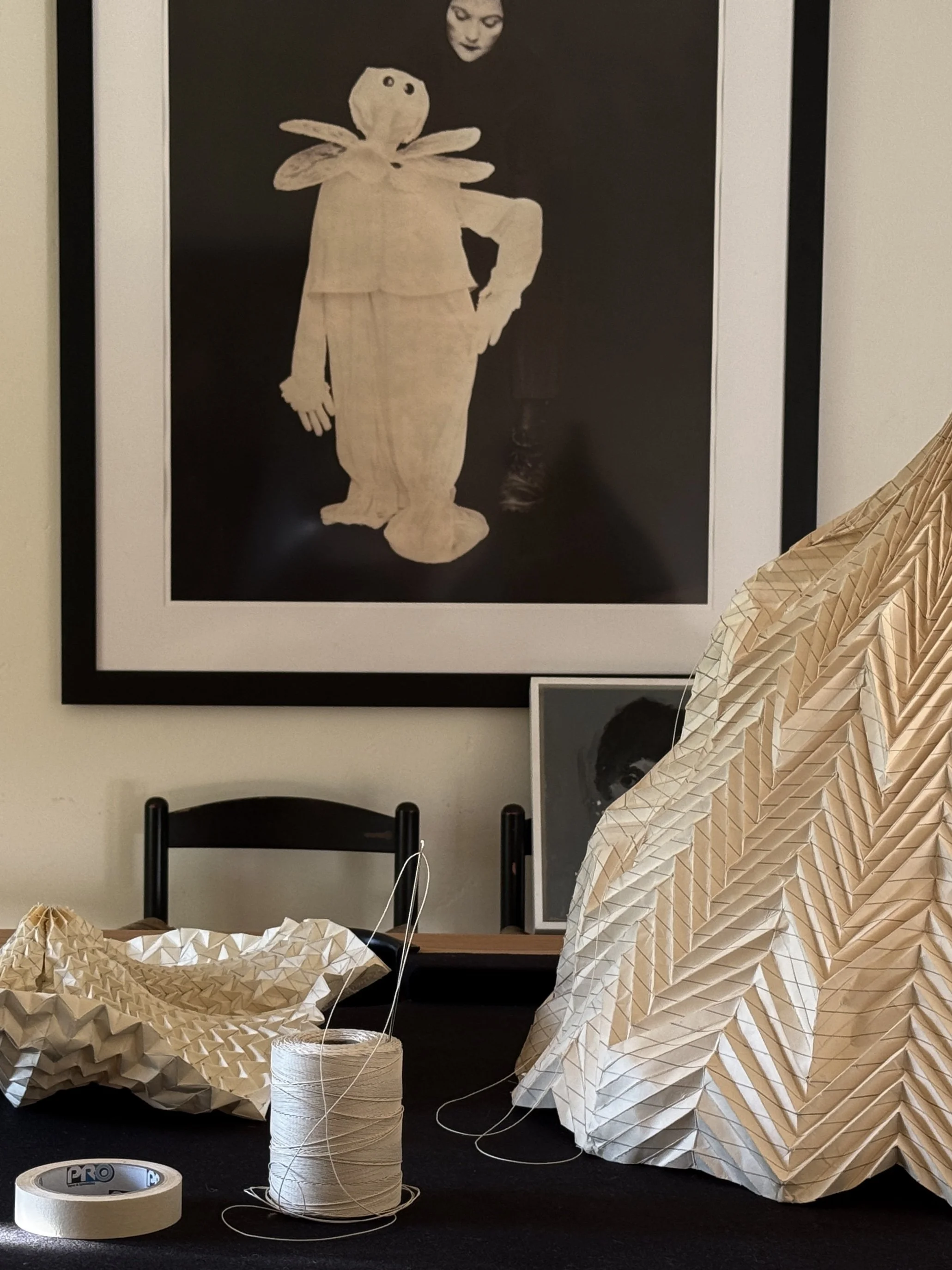
For nearly thirty years, a Los Angeles pleating factory used these hand-scored manila patterns to set pleats in fabric. When they were retired, they came to our studio.
Each pattern carries the record of its origin: pencil lines, worn edges, the impressions of the hands that worked it. The paper holds its memory and keeps its form long after use. We took that as an invitation to collaborate with the makers who came before us.
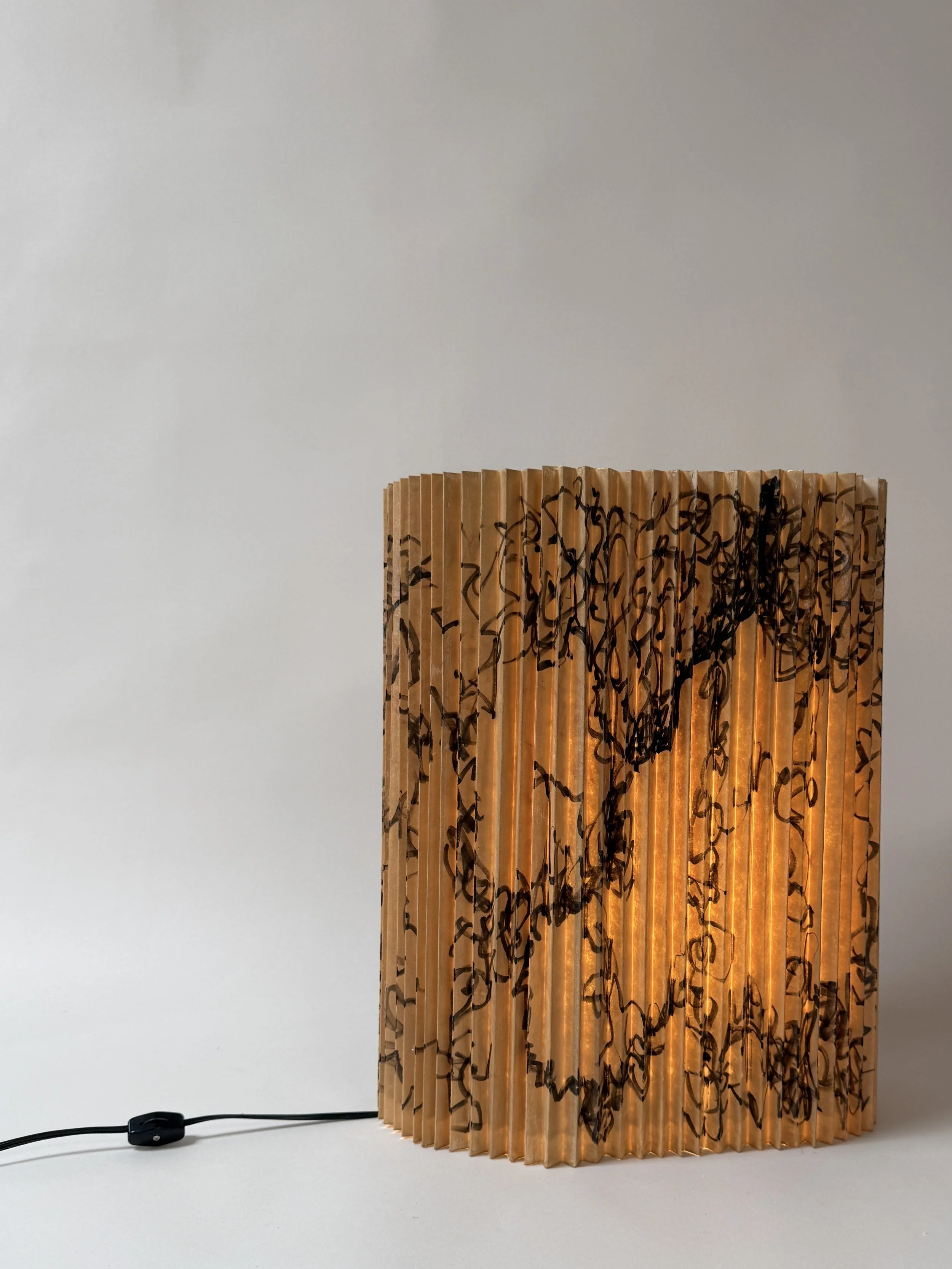
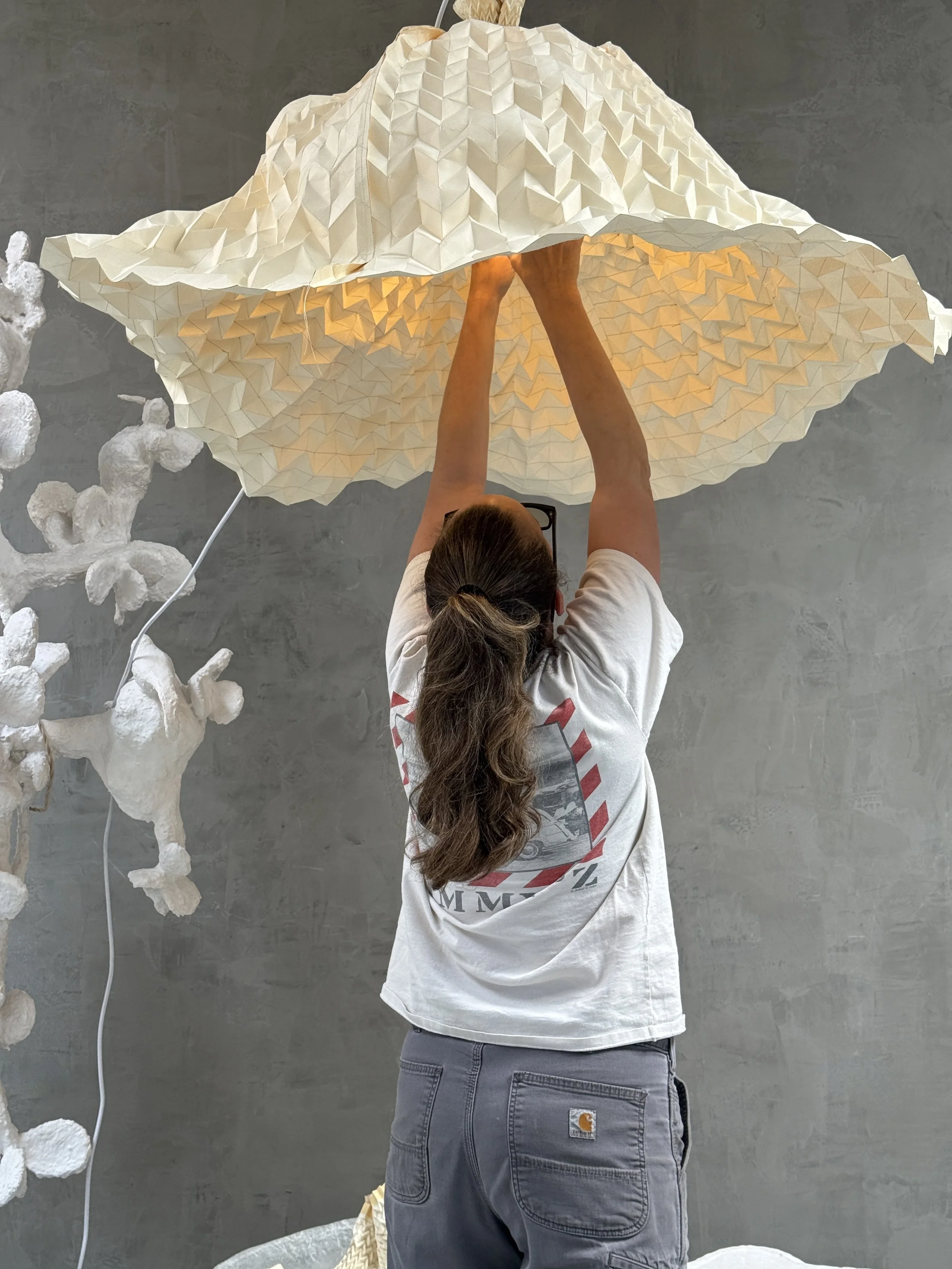
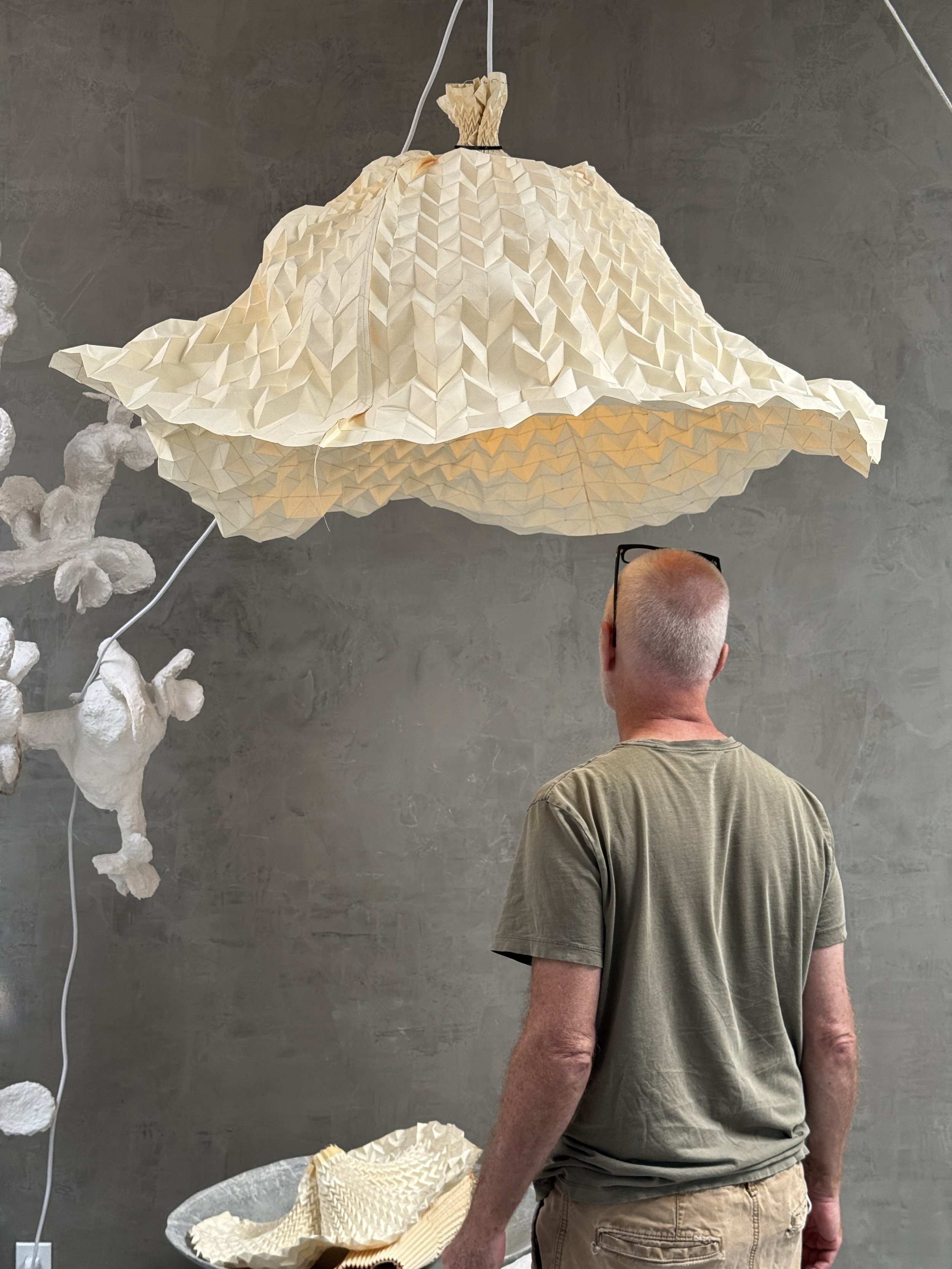
In cement, the fold contracts into something carved and ancient, a modern artifact with the hand visible in every surface. In paper, it opens again: our Tulip shades glow, and to the touch they move with a surprisingly kinetic energy. In both, the pattern makers' precise geometry begins to slip and sway, and we keep those shifts because they carry our touch alongside theirs.
Machined plotters have taken over the task of scoring these patterns, and this is the last batch that will ever be done by hand. Our supply is limited and cannot be replaced. Every piece holds a fragment of a craft on its way to disappearing, reimagined while the material still exists.
Currently showing at Stahl + Band, Venice, LA
PLINTH
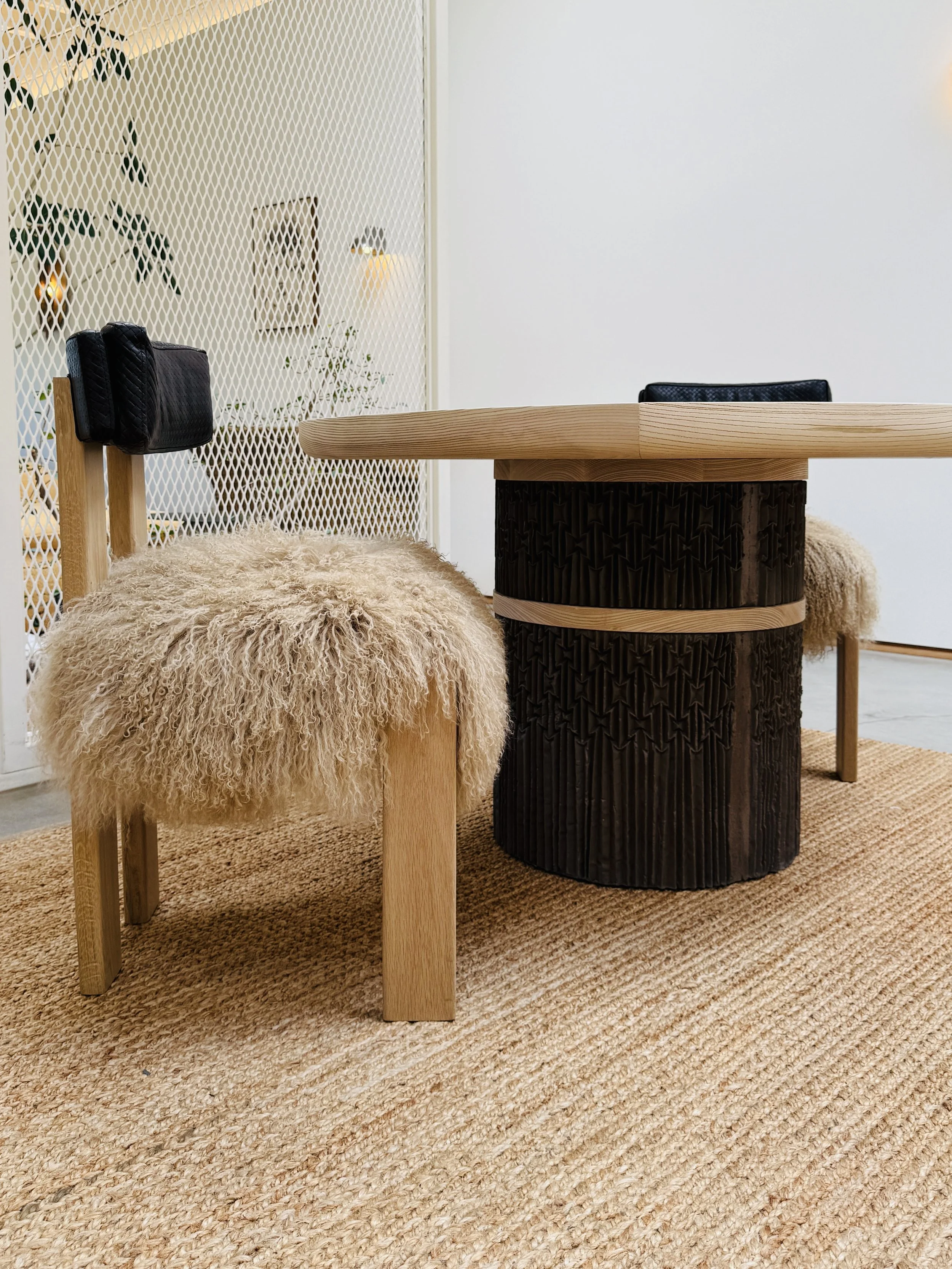
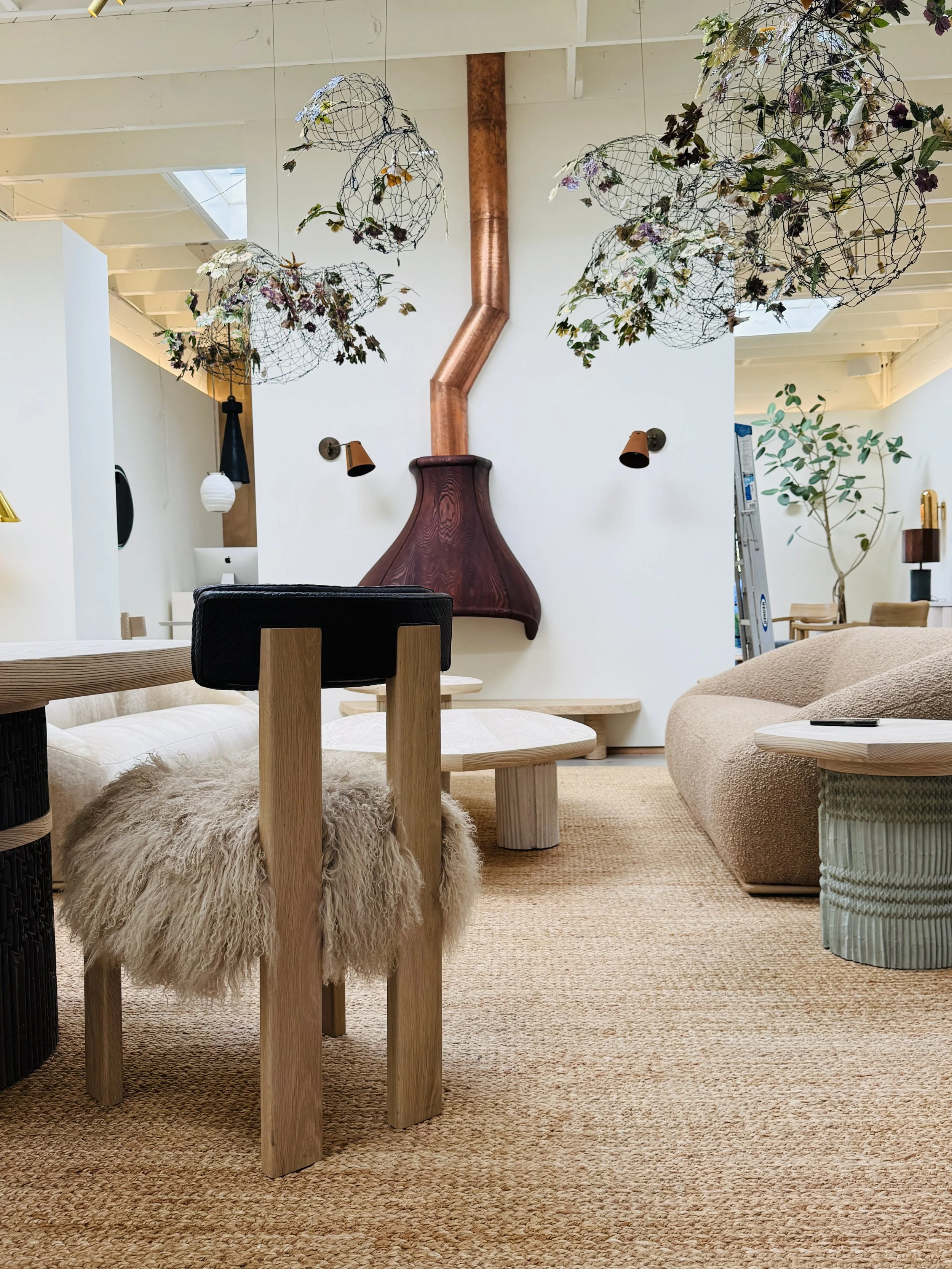
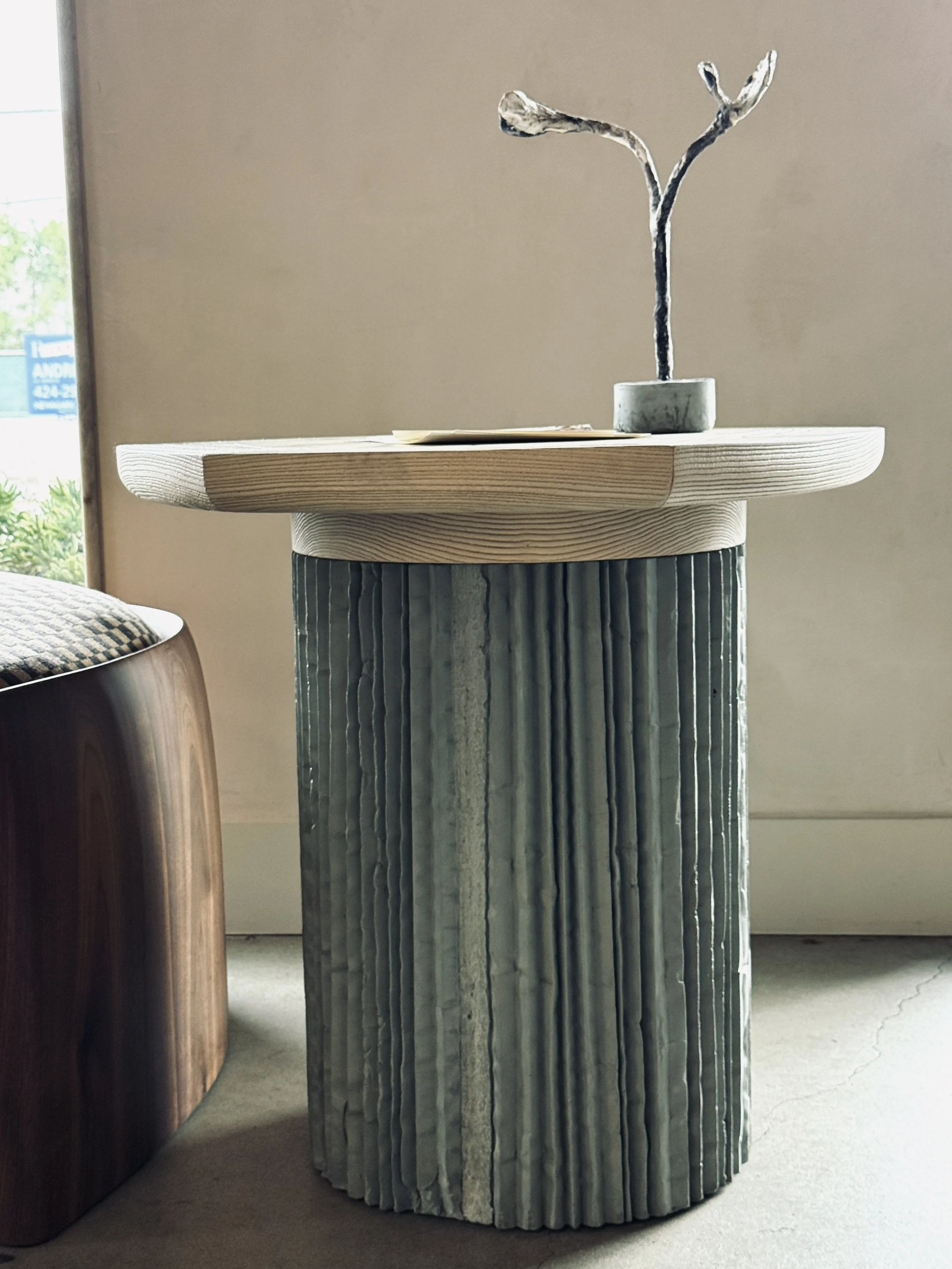
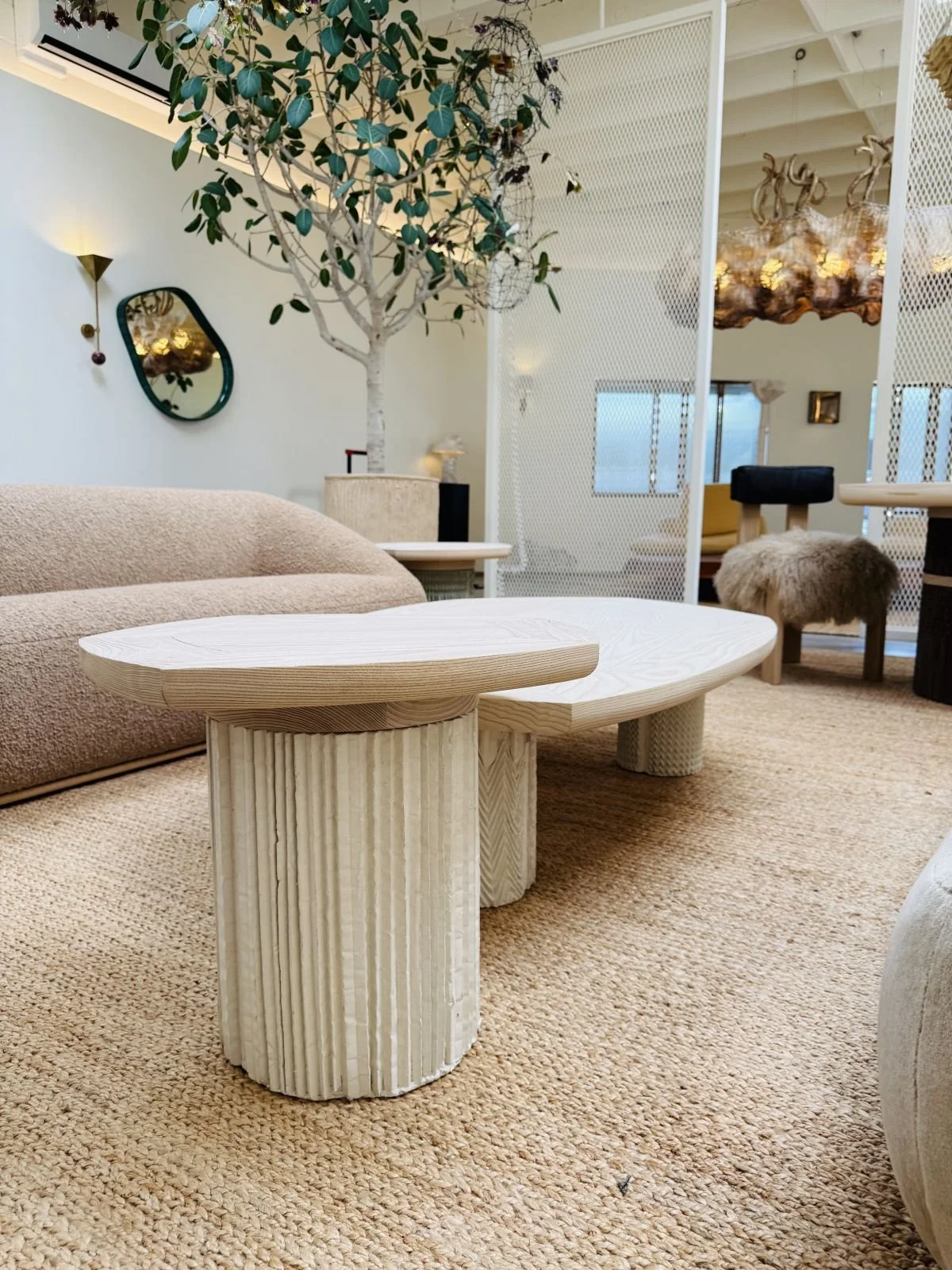
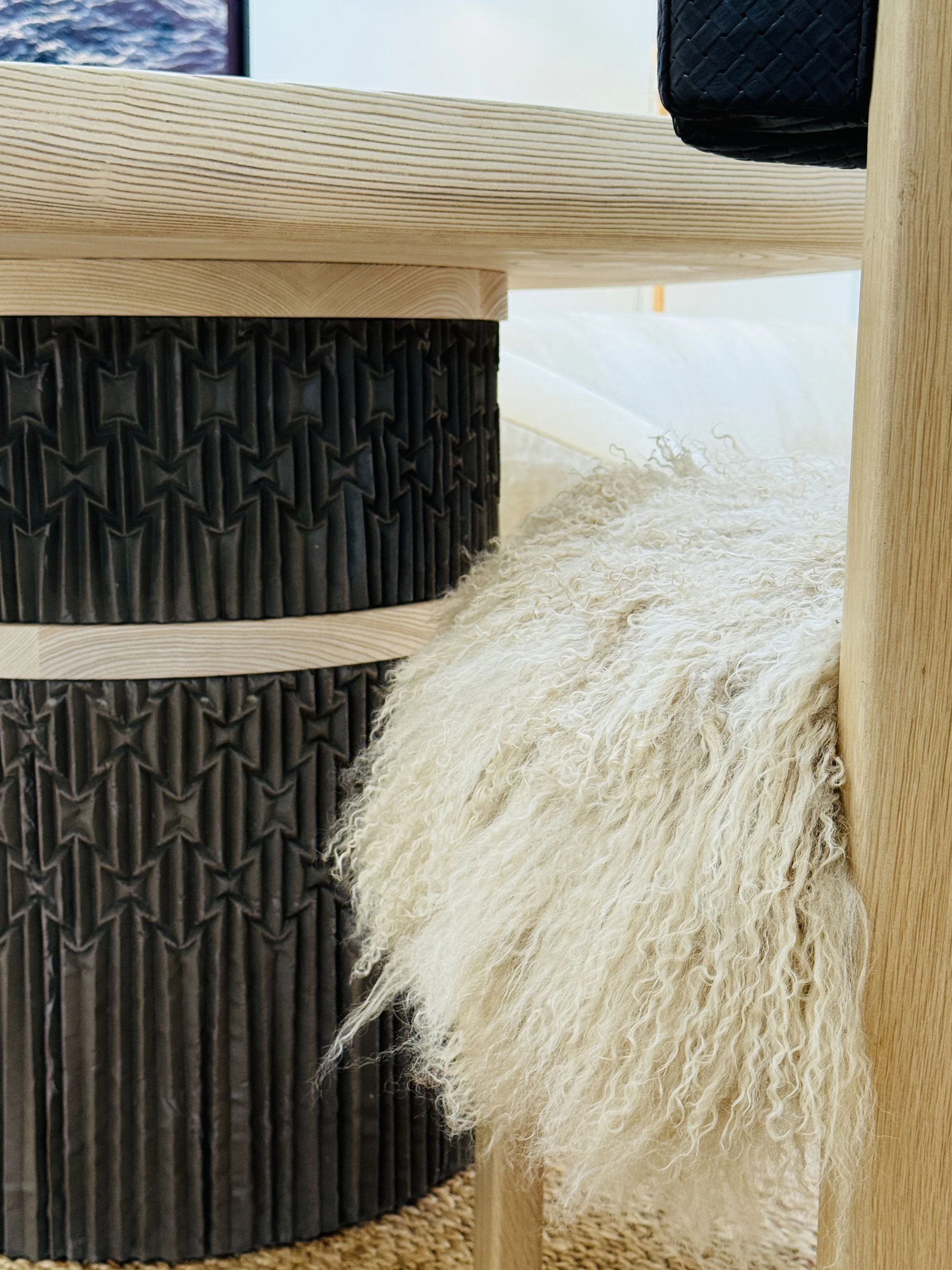
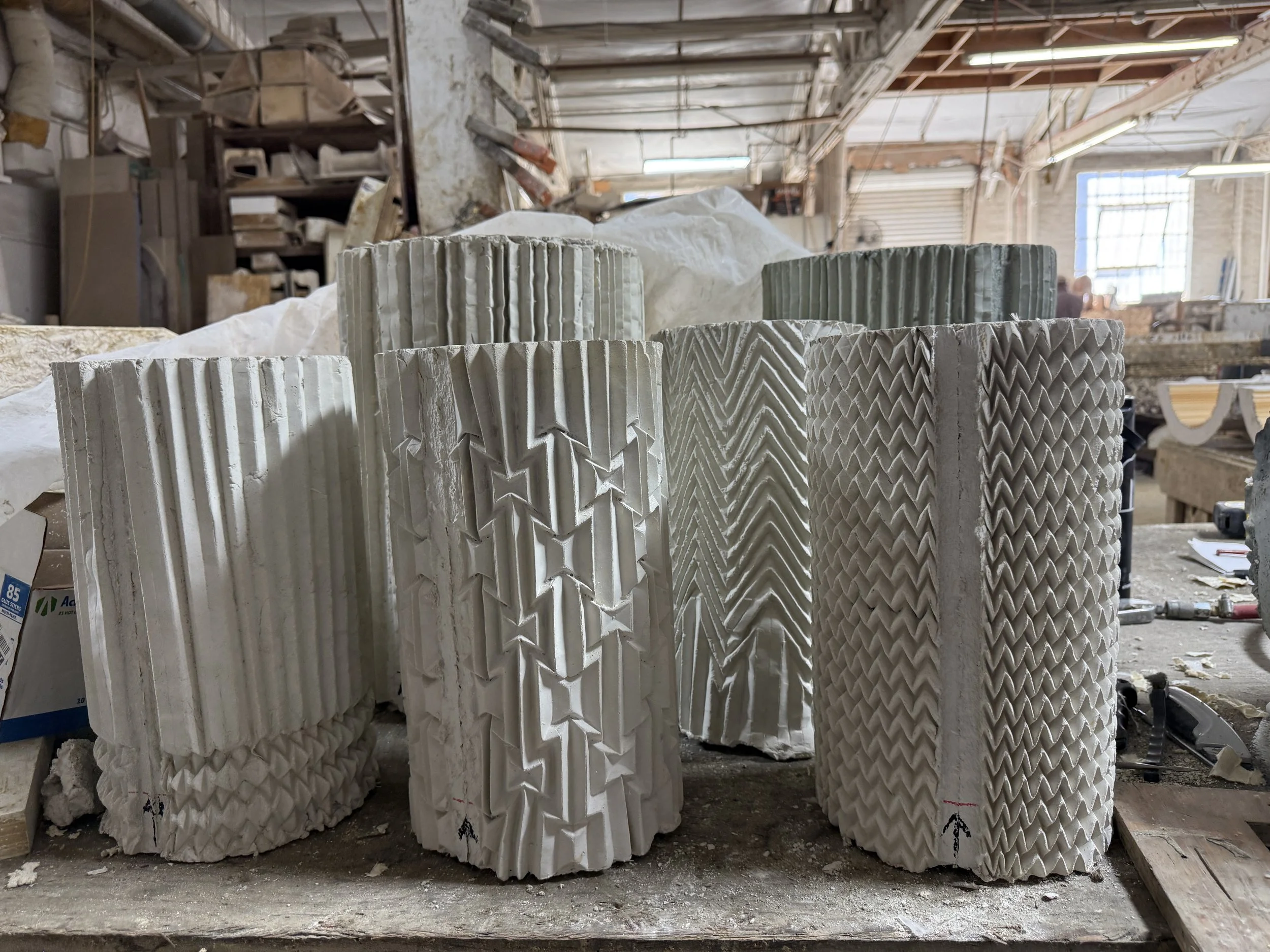
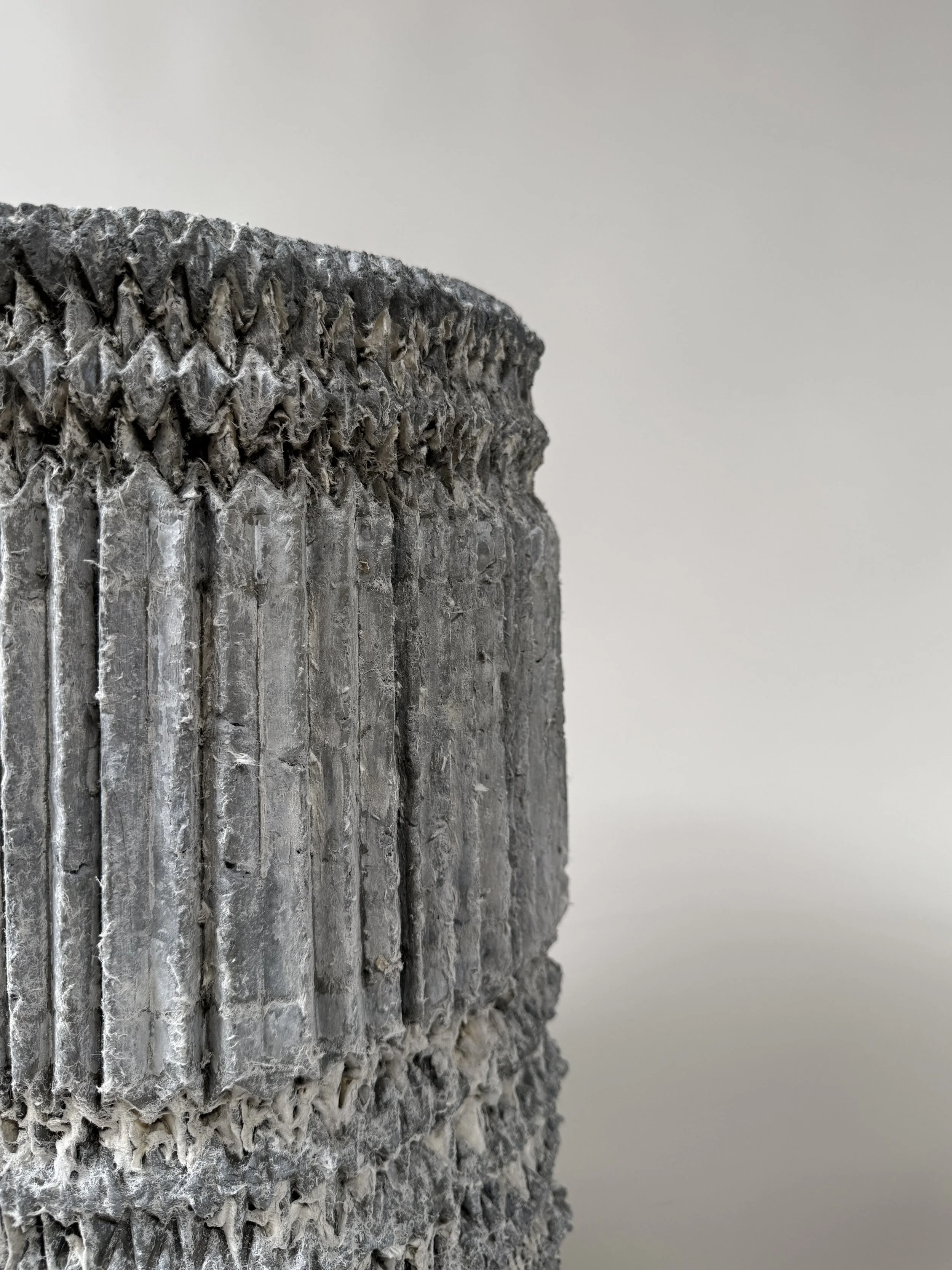
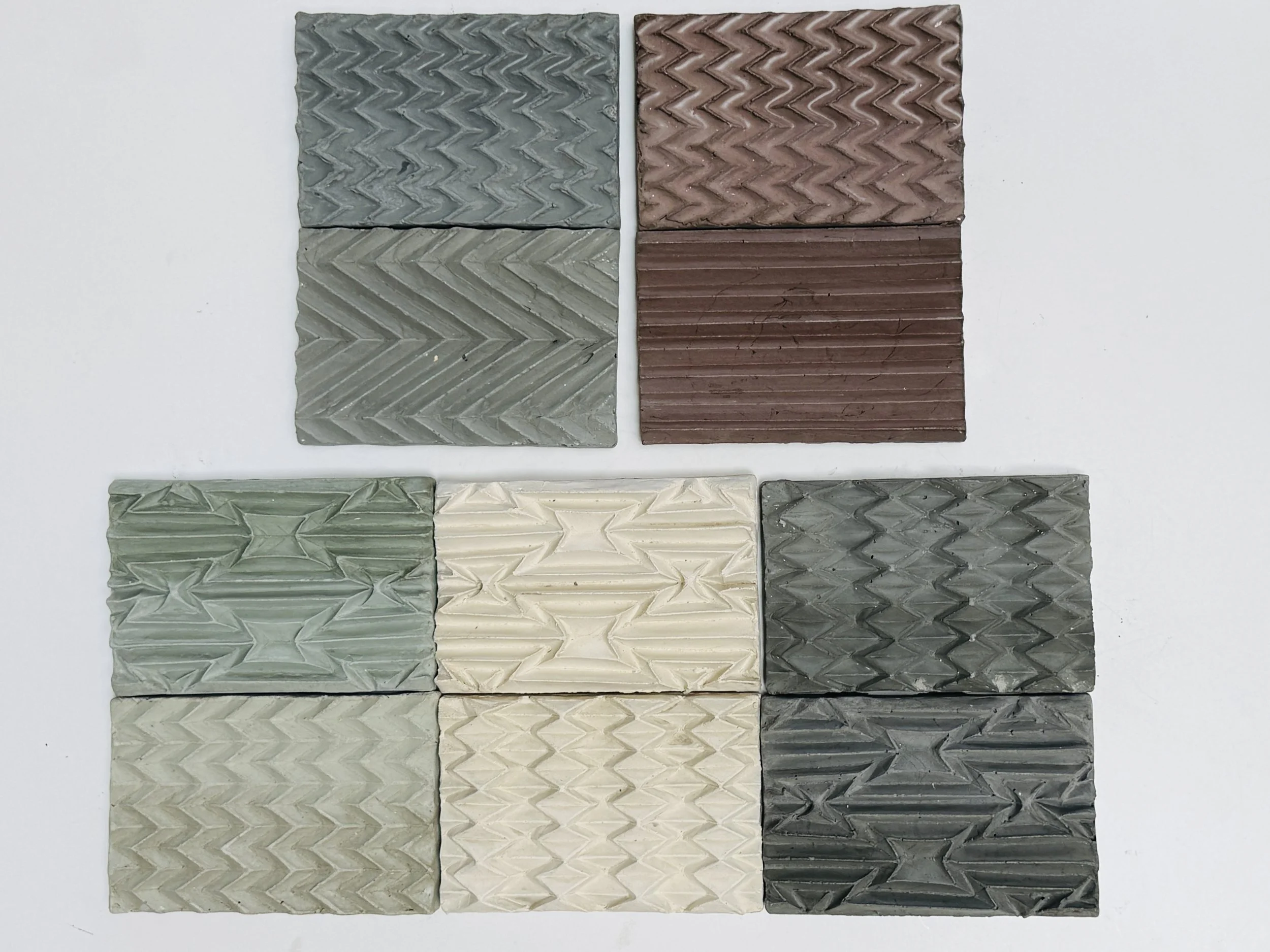
In the Plinth series, the paper took on a different job: a single-use mold for table bases and legs. Each retired pattern is built into a cylindrical shell and used once to cast a cement base. The pleat's geometry — a tight, woven lattice of diamonds and chevrons, almost basketlike — transfers directly into the cured surface. Because the paper itself was folded by hand, that geometry is never quite perfect; every small irregularity in the fold or the paper becomes a permanent irregularity in the cast, so no two pieces carry the same pattern. Each base is cast in a single, considered tone — ivory, mahogany, pistachio, olive, or gray. The pattern's own relief in shadow creates a shift across its surface like strata exposed in a quarry wall. The result reads as found — from somewhere much older than it is. Developed in collaboration with Stahl + Band, who designed and developed the tabletops to complete each piece.
tulip shade
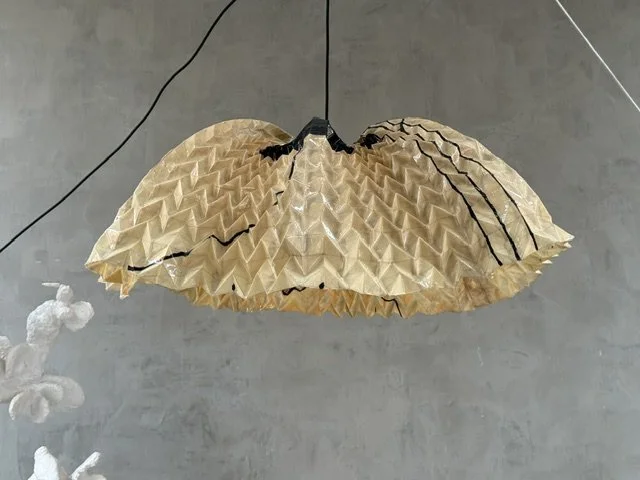
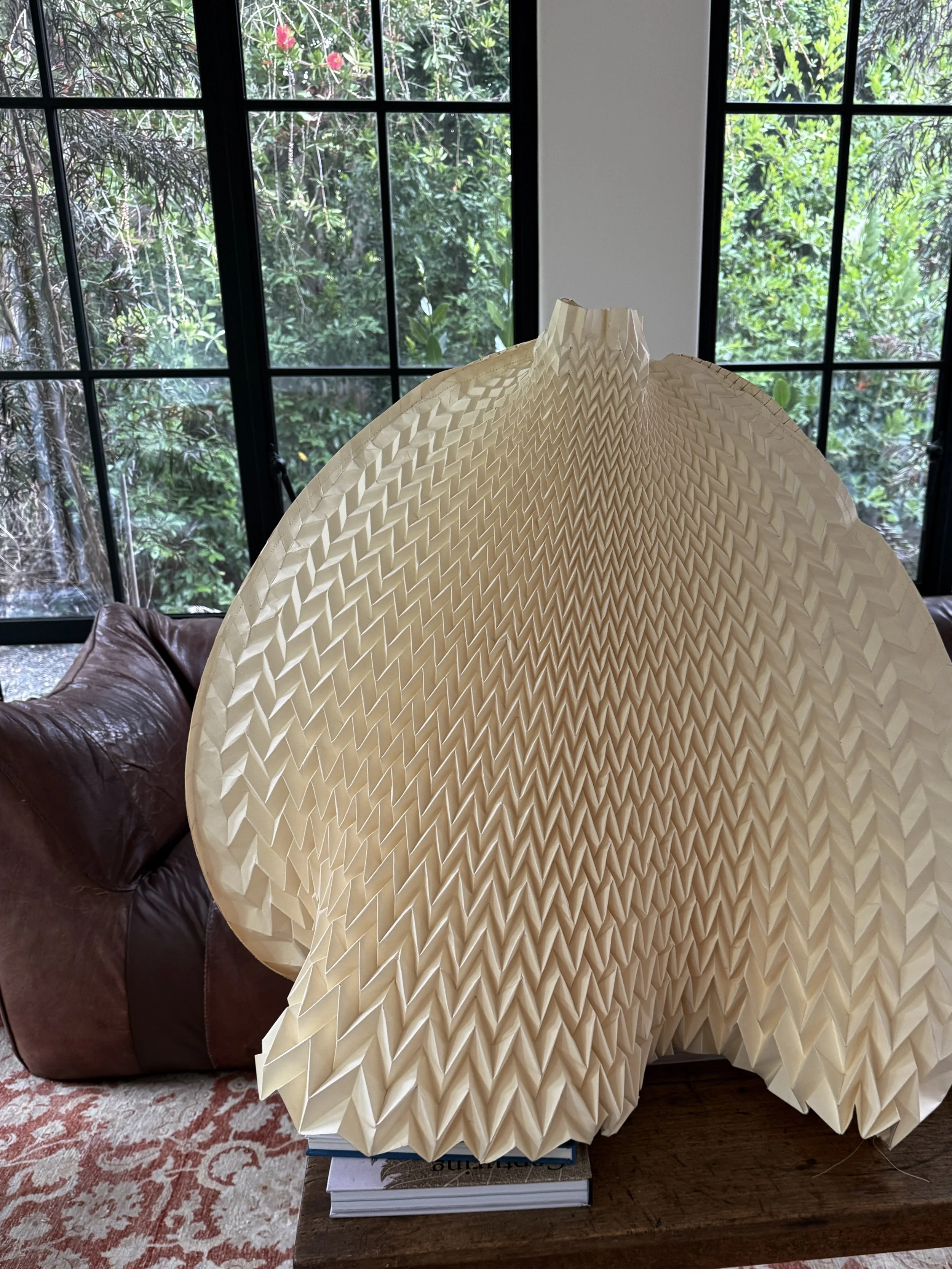
The Tulip Shade, with its open, flared silhouette reading like a flower caught mid-bloom, is worked directly over the pattern makers' marks — their pencil and ink lines, their score guides — kept intact underneath. By hand, a second layer is painted on top: the shade's own form, drawn back onto itself — bold, irregular silhouettes tracing the tulip's silhouette in shadow across the dense herringbone pleat, a drawing of the object on the object. The shade is then hand-sewn into its mounded form and sealed in platinum-cure silicone — a coating that protects the paper permanently, warms the cream pleat to a honeyed amber, and gives the painted passages a glossy, almost lacquered dimension. Developed in collaboration with Stahl + Band, who engineered the lighting hardware and fittings.